For years, choosing a plant-based milk could feel relatively simple: oat, almond, soya, macadamia or coconut? But new research suggests British consumers are paying closer attention not only to the type of product they choose, but also to the information they find on its label.
Research from Soil Association Certification, reported by The Grocer on 1 September 2026, found that just 44% of British consumers surveyed trust food labels, while 53% say they find them overwhelming. The findings open up an interesting conversation for the growing plant-based category, where consumers are faced with an increasingly wide choice of products, ingredients, claims and certifications.
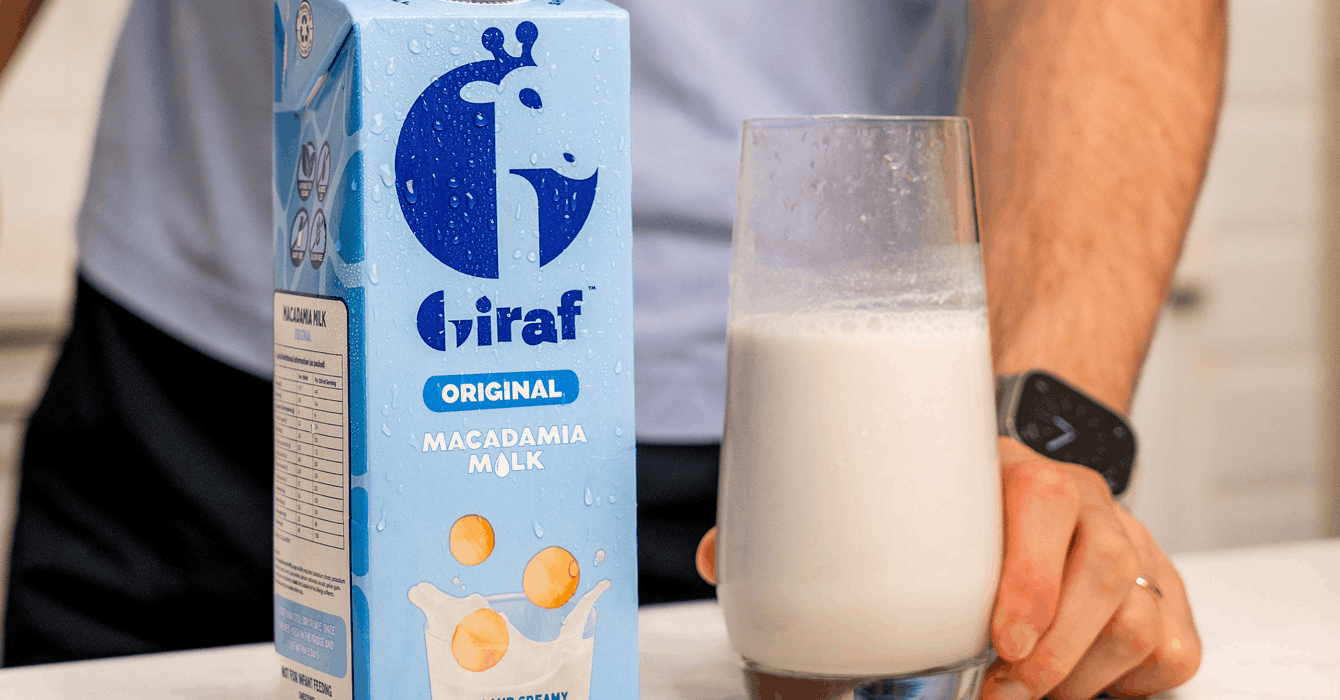
For Giraf Macadamia Milk, a South African-born plant-based milk brand now finding its way into UK coffee shops, convenience stores, online retailers and homes, the conversation is a welcome reminder of the value of helping consumers understand what they are choosing.
What’s Actually In Your Plant Milk?
Being labelled “plant-based” or “dairy-free” doesn't automatically answer every question an increasingly ingredient-conscious shopper may have. Consumers are becoming more interested in ingredient lists, added sugars, added oils, allergens, certifications and how the products they consume every day are made. It represents an important evolution for the plant-based category: consumers aren't necessarily moving away from alternatives; they're becoming more selective about which ones they choose.
Giraf Macadamia Milk believes this shift towards greater curiosity and transparency is a positive one. Made with macadamias sourced from South Africa, Giraf has placed the nut at the heart of its plant-based milk range. The range is dairy-free and gluten-free, contains no added seed oils and is approved by the Vegetarian Society, whose certification provides independent assurance around dietary suitability and ingredient standards.
The Vegetarian Society's vegan certification criteria include no animal-derived ingredients, measures to prevent cross-contamination during production, GMO-free ingredients and no animal testing carried out or commissioned. For consumers increasingly overwhelmed by what's written on food packaging, recognised third-party certification can offer another way to understand what they're buying.
Giraf Founder, Philip Moufarrige, says consumers deserve to understand what they're pouring into their coffee, cereal or smoothie each morning.
“Plant-based has become a huge category, but consumers are now asking the next question: what does plant-based actually mean for the product I'm buying? People are turning cartons around. They're reading ingredients, questioning what has been added and becoming much more interested in where their food comes from. We think that's a really positive change. We want consumers to choose us not simply because we're dairy-free, but because they understand the product they're choosing and genuinely enjoy it.”
Beyond The Front Of The Carton
Giraf believes there are a few simple things consumers can consider when comparing plant-based milks:
Read beyond the headline claims.
Words such as “plant-based”, “vegan” or “dairy-free” can be useful starting points, but turning the carton around and looking at the ingredient list provides greater context about what you're actually buying.
Look at added sugars.
Sugar content can differ between products and variants. Consumers looking to reduce added sweetness may want to compare nutrition labels and ingredient lists or consider an unsweetened option.
Check for added oils.
Some plant-based milks use added oils as part of their formulation. For consumers who prefer products without them, checking the ingredient list is the easiest way to know what they're buying. Giraf's range contains no added seed oils.
Look for independent certification.
Recognised third-party certification can provide additional assurance beyond a brand's own front-of-pack claims. Giraf's Macadamia Milk range is approved by the Vegetarian Society, whose certification process reviews ingredients and production processes against defined standards.
Consider allergens and dietary requirements.
A plant-based product isn't automatically suitable for every dietary requirement. Giraf, for example, is made using macadamias, which are tree nuts, and consumers with allergies should always check the allergen information on the packaging.
Ask where the ingredients come from.
Transparency doesn't have to stop at the nutrition panel. Increasingly, consumers want to understand where their food was grown, who produced it and the journey it took to reach the shelf.
For Giraf, that journey begins in Mpumalanga, South Africa, where its macadamias are sourced from 186 local farmers located within 50km of its factory. The business employs 130 people from surrounding communities and says macadamia husks and shells are used to generate electricity as part of its efforts to reduce its environmental footprint.
A New Chapter For Plant-Based Milk
The rise of plant-based milk was initially driven by consumers looking for alternatives to dairy. Giraf believes the next phase could increasingly be shaped by something different: choice with greater scrutiny. Taste, texture and how a milk performs in coffee will remain important, but ingredient awareness, certification and transparency are becoming increasingly influential in how consumers navigate the category.
Moufarrige adds:
“Transparency shouldn't mean consumers need a degree in food science to understand what's inside the carton. We want people to be able to turn a Giraf carton around, read our ingredient list and understand what they're choosing. Our labels clearly set out what's in each product, while independent Vegetarian Society certification provides consumers with further assurance around the standards behind it.
“We're proud to say our range contains no added seed oils, and we're equally open about the ingredients we do use. For us, transparency isn't about telling people what they should or shouldn't drink. It's about putting the information on the carton and allowing them to make that choice for themselves.” says Giraf Founder Philip Moufarrige. “For us, a label shouldn't create more questions than it answers.”