A food label has to do several jobs at once. It must identify the product, help consumers use and store it safely, disclose ingredients and allergens, provide the required business details and avoid creating a misleading impression.
For a new product, the safest approach is to build the label from the legal requirements rather than designing the front first and trying to fit compliance information into the space that remains.
The checklist below covers the information commonly required on prepacked food sold in the UK. Exact requirements can differ according to the product, where it is sold and whether it is placed on the market in Great Britain or Northern Ireland. Product-specific rules may also apply, so this should be treated as a working guide rather than legal advice.
1. The name of the food
The label needs an accurate name that tells the consumer what the product is. Where a legal name exists, it must be used. If there is no legal name, the business may need to use a customary or sufficiently descriptive name.
The marketing name is not a substitute. A creative product title can appear prominently, but the legal or descriptive name must still make the true nature of the food clear.
Additional wording may be required where the product has been treated in a way that a consumer would not expect, or where failing to explain its construction could mislead. Meat that appears to be a single cut but is made from separate pieces, for example, may need to be described as formed meat. Certain meat products with added water require that fact to appear with the name.
2. The ingredients list
Most foods made from more than one ingredient require an ingredients list. The list should use a heading containing the word “ingredients” and show ingredients in descending order by weight at the time they were used.
Compound ingredients may need their own component ingredients shown. Additives should be declared using their functional category and specific name or approved number where required.
Water is an ingredient and may need to be listed. The fact that it feels less substantial than flour, oil or meat does not remove it from the calculation.
3. Emphasised allergens
If any of the 14 regulated allergens are present as ingredients or processing aids and remain in the finished product, they must be identified and emphasised in the ingredients list. Common methods include bold type, contrasting colour or a different style.
The emphasis must be consistent and clear every time the allergen appears. A separate “contains” box should not normally replace correct emphasis within the ingredients list for prepacked food.
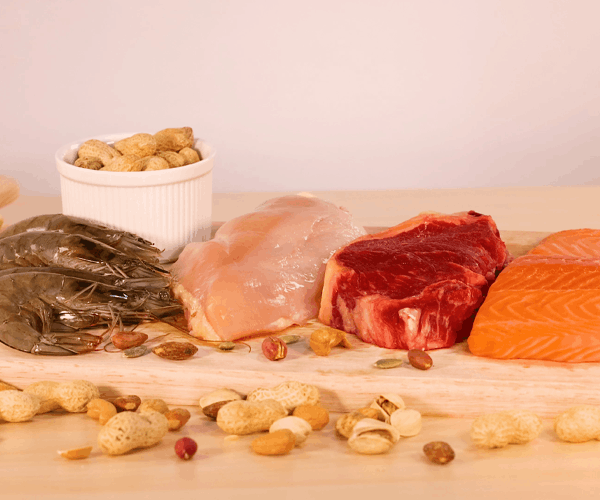
The 14 categories include cereals containing gluten, crustaceans, eggs, fish, peanuts, soya, milk, nuts, celery, mustard, sesame, sulphur dioxide or sulphites above the relevant level, lupin and molluscs.
Precautionary statements such as “may contain” concern unintended cross-contact and are different from mandatory ingredient declarations. They should only be used after a genuine risk has been identified and cannot be sufficiently controlled.
4. Quantitative ingredient declarations
A quantitative ingredient declaration, commonly called QUID, shows the percentage of a particular ingredient.
It is commonly required when an ingredient appears in the name, is emphasised by words or pictures, or is normally associated with the food by consumers. A strawberry yoghurt, for example, will usually need to state the percentage of strawberry.
The percentage may appear in or next to the name of the food, or beside the relevant ingredient in the ingredients list. There are exemptions, so the need for QUID should be assessed product by product.
5. Net quantity
Prepacked food generally needs a net quantity in metric units. Solid foods are normally shown in grams or kilograms, while liquids are shown in millilitres, centilitres or litres.
Foods packed in a liquid medium may also require a drained net weight. Glazed frozen products must not count the ice glaze as part of the net food weight.
The name of the food and net quantity need to be presented so they can be seen together in the same field of vision. Alcoholic strength may also be part of that requirement for relevant drinks.
6. Date marking
Most prepacked foods need either a “best before” or a “use by” date.
A use-by date is used where consuming the food after the date could present a safety risk. Food should not be sold or eaten after its use-by date. A best-before date relates principally to quality. The food may remain safe after the date when stored correctly, although its flavour, texture or appearance may decline.
The correct date mark must be determined through a suitable shelf-life assessment. It should not be chosen simply by copying a competitor or selecting a commercially convenient period.
Where the date does not appear directly after the wording, the label must make clear where it can be found, for example “best before: see lid”.
7. Storage conditions and instructions for use
Special storage conditions must be stated where they are needed to keep the product safe or maintain its stated quality. This can include refrigeration, freezing, protection from sunlight, or instructions to keep the product dry.
Instructions after opening may also be required, such as “keep refrigerated and consume within three days”. Those instructions need to be supported by the product’s safety and shelf-life evidence.
Cooking or preparation directions should be included where the consumer cannot use the food properly without them. The instructions must be practical for the equipment and portion being described.
8. The responsible business name and address
The label must include the name and postal address of the food business responsible for the information, or the relevant importer. A telephone number, website or email address can be useful additions, but they do not replace the required postal address.
The correct business details depend on the market and supply-chain arrangement. Products placed on the market in Great Britain and Northern Ireland may require different consideration because different food-law frameworks can apply.
9. Country or place of origin
Origin information is mandatory for certain foods, including particular meats, fish, honey, olive oil, wine, fruit and vegetables.
It is also required where leaving it out could mislead consumers. Packaging that creates a strong British, Italian or French impression may require clarification if the food or its primary ingredient comes from somewhere else.
Where an origin claim is made for the food but the primary ingredient has a different origin, additional information may be needed. Broad claims such as “British”, “locally made” or “from Yorkshire” should therefore be checked against the actual ingredients and production process.
10. Nutrition information
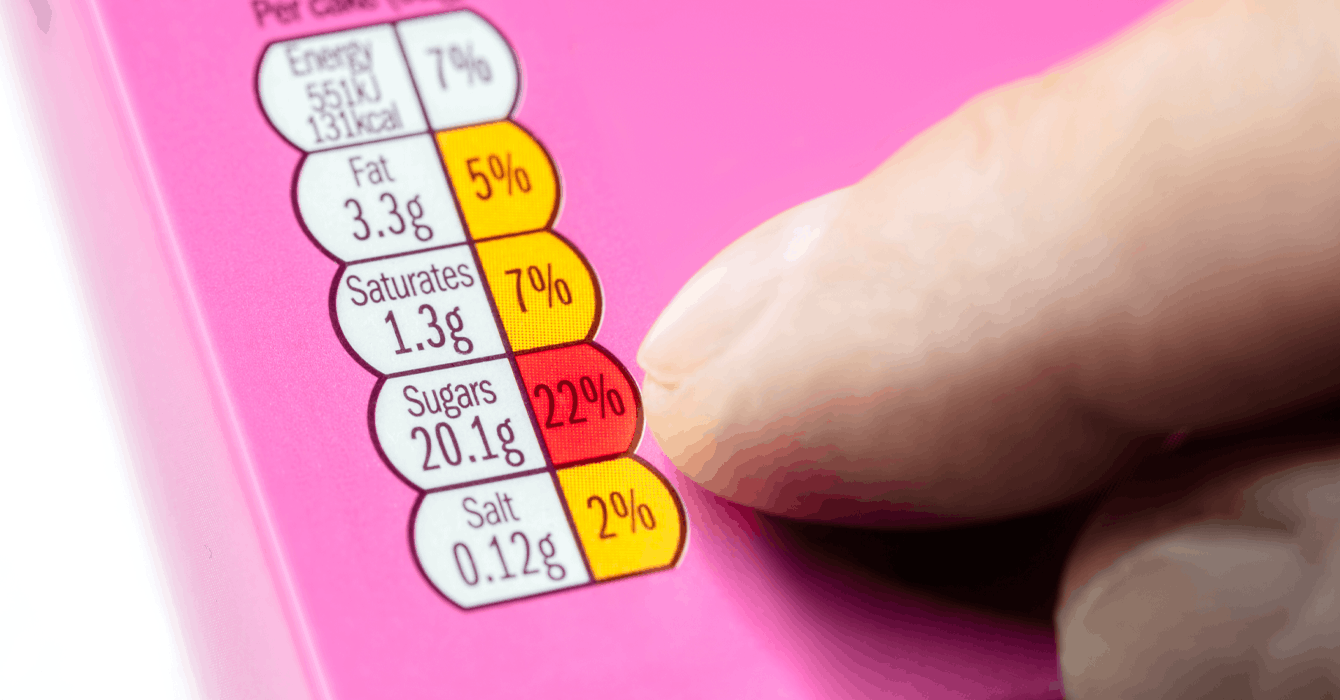
Nutrition information is mandatory on most prepacked foods, subject to specific exemptions. The declaration normally covers energy, fat, saturates, carbohydrate, sugars, protein and salt, presented in the required order and generally per 100 grams or 100 millilitres.
Additional per-portion information may be given if the portion is clearly defined and the number of portions in the pack is stated.
Nutrition values can be based on analysis, accepted data or calculation from ingredients, provided the method gives reliable average values. Reformulation should trigger a review rather than allowing old figures to remain on the label.
Nutrition and health claims have separate conditions. Phrases such as “high in fibre”, “low fat” or “supports normal bones” cannot be used simply because they sound attractive. The product and wording must meet the relevant rules.
11. Lot identification
A lot or batch mark helps identify the production batch for traceability and recalls. A use-by date can sometimes serve as the lot identification where it is sufficiently specific, but the business should ensure the coding system supports effective traceability.
The code needs to connect the finished product with production, raw-material and distribution records. A batch mark that nobody can interpret quickly during an incident has limited practical value.
12. Warnings and product-specific statements
Some products require additional statements. Examples can relate to sweeteners, caffeine, liquorice, protective atmospheres, irradiation, genetically modified ingredients, alcohol or particular conditions of use.
Food supplements, infant formula, meat products, honey, chocolate, fruit juice, jam and other regulated categories can have their own compositional and labelling rules. Export products may also require different language and market-specific information.
Presentation matters as much as content
Mandatory information must be clear, legible, visible and difficult to remove. It must not be hidden by a fold, label, image or other material.
Minimum font-size rules apply, based on the x-height of the characters, with a reduced minimum for smaller packages. Small packs may have limited exemptions, but a small design area is not a general exemption from labelling law.
Online sales also need attention. Mandatory food information generally needs to be available before purchase, apart from information such as the durability date that cannot reasonably be shown in advance. The information must still appear correctly when the product is delivered.
Final checks before artwork approval
Before a label is released, compare the final artwork against the approved product specification rather than the previous label. Confirm the ingredients are in the correct order, allergens are emphasised, percentages match the formulation, nutrition values are current and claims are supported.
Check every pack size and flavour separately. A master design can create false confidence when one variant contains a different allergen, ingredient, origin or cooking instruction.
Finally, have the artwork reviewed by someone who was not involved in creating it. Familiarity makes errors easy to miss. A structured sign-off involving technical, regulatory, commercial and production teams can prevent an expensive packaging correction or product withdrawal.
This article is general information and not legal advice. Businesses should consult current official guidance, relevant legislation and competent regulatory specialists.
REFERENCES
1. GOV.UK, Food labelling and packaging: what you must show:
https://www.gov.uk/food-labelling-and-packaging/food-labelling-what-you-must-show
2. GOV.UK, Food labelling: giving food information to consumers:
https://www.gov.uk/guidance/food-labelling-giving-food-information-to-consumers
3. GOV.UK, Food labelling and packaging: ingredients list:
https://www.gov.uk/food-labelling-and-packaging/ingredients-list
4. Food Standards Agency, Packaging and labelling: legal requirements for food businesses:
https://www.gov.uk/government/publications/packaging-and-labelling/packaging-and-labelling
5. Food Standards Agency, Nutrition labelling:
https://www.gov.uk/government/publications/nutrition-labelling
6. Food Standards Agency, Allergen guidance for food businesses:
https://www.food.gov.uk/business-guidance/allergen-guidance-for-food-businesses