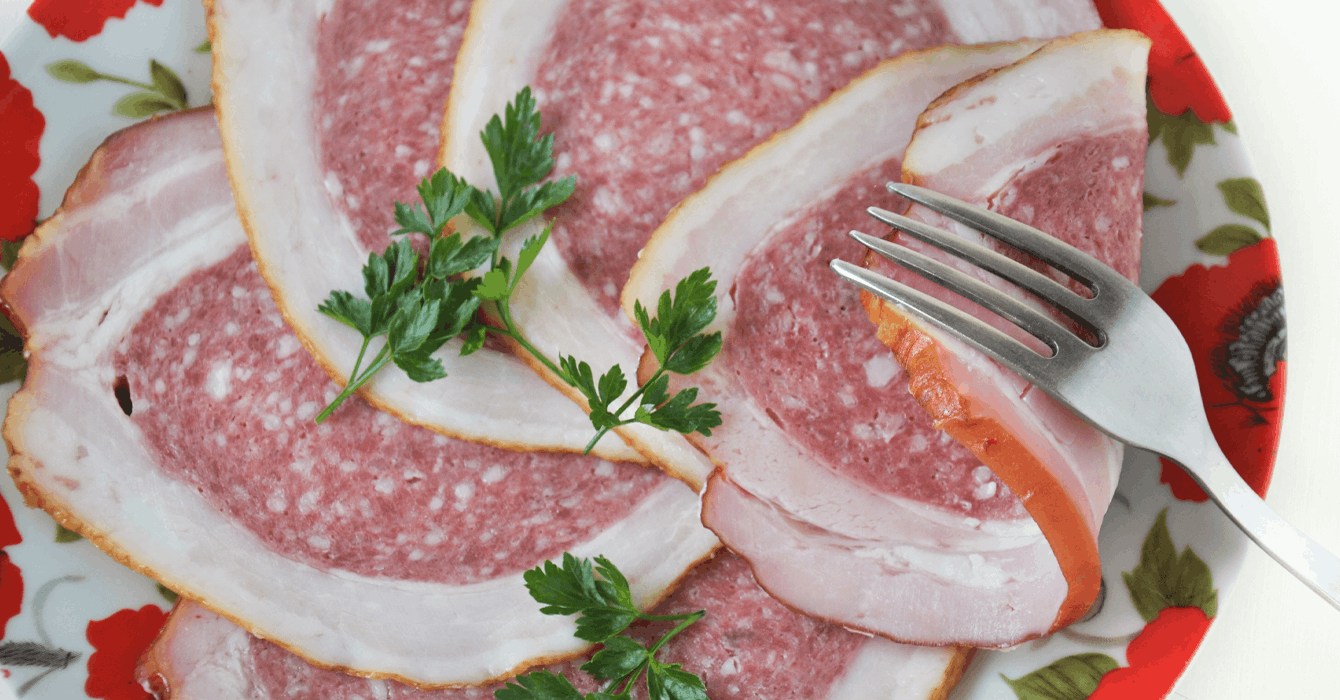
A good ham should taste of pork first and seasoning second. It should have a recognisable texture, enough moisture to remain succulent, and a label that explains what you are buying rather than hiding it behind attractive packaging.
Price can be a clue, but it is not a guarantee. Premium branding, a thick glaze or rustic-looking paper may add cost without improving the meat. The most useful information is usually found in smaller print: the name of the product, the percentage of pork, the ingredients, any added water, the cut, the curing method and the storage instructions.
Understanding what those details mean makes it much easier to choose a ham that suits the way you intend to serve it.
Ham and gammon are related, but not identical in use
In everyday British retail language, gammon usually means a cured leg of pork sold raw and intended to be cooked. Ham is generally the cooked or ready-to-eat result, although dry-cured hams such as prosciutto follow a different process and may be eaten without conventional cooking.
The distinction matters because a gammon joint requires cooking according to its instructions, while a packet of sliced ham is normally ready to eat. Never rely on appearance alone. Check the product description and preparation guidance.
Curing is what separates ham from fresh pork. Salt is central to the process, sometimes alongside nitrite or nitrate, sugar, spices, smoke or other flavourings. The cure develops flavour, colour and keeping quality, but the result varies considerably according to the cut, time, method and amount of water used.
Start with the name of the food
Food labels must describe products accurately and must not mislead consumers. The legal or descriptive name often tells you more than the brand name on the front.
Look for wording such as “formed meat” or “with added water”. UK guidance requires added water to be declared in the name of a meat product when it exceeds the relevant threshold and the product looks like a cut, joint, slice or portion. A product made from more than one separate piece but presented as a whole cut must also be described appropriately.
Neither description automatically means the food is poor. Formed ham can be convenient and affordable, while added water can make a product softer and less expensive. The point is that you should know what you are paying for.
Check the percentage of pork
The ingredients list is one of the clearest ways to compare similar packs. Ingredients are listed in descending order by weight, and the quantity of a highlighted or named ingredient may need to be shown as a percentage.
For a ham product, a higher percentage of pork generally means less room for added water, starches, proteins and other ingredients. That does not mean the product with the highest number will always taste best. A carefully cured ham may include sugar, spices or a glaze for good reason. The percentage simply helps you compare the balance of meat and additions.
Be cautious when two packs look similar but one contains noticeably less pork. The difference may be reflected in texture, cooking loss and flavour concentration.
Whole-muscle and formed ham feel different
Traditional whole-muscle ham is made from recognisable muscles from the pork leg. When sliced, it tends to show natural variation in grain and shape. Formed ham is made by combining separate pieces into a consistent joint or block.
Whole-muscle ham often has a firmer, more natural bite. Formed ham can be softer and more uniform, which may work well for sandwiches, catering or children’s lunches. Good quality exists in both categories, but they are different products and should not be judged by exactly the same standard.
If the slices are perfectly identical, unusually wet or almost paste-like, that may indicate a highly processed structure. Some shoppers prefer that texture; others want visible muscle fibres and a more substantial chew.
Consider the curing style
Wet curing introduces a brine to the meat, usually through immersion or injection. It can produce a moist, mild ham and is widely used for cooked products.
Dry curing applies salt and other curing ingredients directly to the meat, followed by a longer period of maturation. The result is usually firmer, more concentrated and saltier. Air-dried hams develop their character over time and are normally served in thin slices.
Smoking adds another layer of flavour but does not automatically mean the ham has been cured for longer or made from better meat. Some products use natural smoke; others use smoke flavouring. The ingredients and product description should make the approach clearer.
Choose the style according to the dish. A mild cooked ham may be ideal for sandwiches and omelettes. A dry-cured ham works better where a small amount of intense flavour is wanted. A gammon joint may suit roasting, boiling or glazing for a larger meal.
Read the ingredient list beyond the first line
Salt and curing agents are expected in ham. Other ingredients may include sugar, dextrose, spices, antioxidants and preservatives. Water, starch, gums or added proteins may be used to increase moisture, improve slicing or alter texture.
An unfamiliar ingredient is not automatically harmful or unnecessary. Food additives have specific functions and are regulated. The practical question is whether the overall product matches the quality and texture you want.
Allergens must be emphasised in the ingredients list where present. Some processed meats can contain ingredients derived from milk, soya, wheat or other regulated allergens, particularly where proteins, coatings or glazes are used. Anyone managing an allergy should check every pack, even when buying a familiar style of ham.
Look at the meat, not only the label
Where the packaging allows, inspect the product. Good cooked ham should look moist without sitting in excess liquid. The surface should not appear slimy, and the pack should be properly sealed.
Colour varies with curing, cooking and the use of nitrite, so deeper pink is not a simple measure of quality. A very pale ham may be mild and moist; a darker dry-cured ham may be intense and firm. Natural variation is normal.
For sliced ham, look for a clean slice with a texture appropriate to the description. For a joint, consider whether a layer of fat or rind is useful. Fat can protect the meat during cooking and contribute flavour, although you may not want to eat all of it.
Match the ham to the job
The “best” ham depends on what you are making.
For a cold platter, a whole-muscle or dry-cured ham with a clear provenance and distinctive flavour may justify a higher price. For a toasted sandwich, a moist cooked ham that melts comfortably with cheese may be more suitable. For roasting, choose a gammon joint of the right size and check whether it is smoked, unsmoked, bone-in or boneless.
Bone-in joints can have an appealing shape and may cook differently, but they are harder to carve and include weight that will not be eaten. Boneless joints are easier to portion. Neither is automatically superior.
Use storage and date information properly
Ready-to-eat ham is perishable. Follow the use-by date, storage temperature and instructions after opening. A use-by date relates to safety, not just quality, and food should not be eaten after it.
Keep chilled ham refrigerated and return it promptly after serving. If the label says to consume it within a stated number of days after opening, follow that instruction even when the printed use-by date is later.
Raw gammon should be kept separate from ready-to-eat foods and cooked according to the pack instructions. Whole cuts of pork and processed meat products should be thoroughly cooked; they should not be treated in the same way as a beef steak served pink.
Value is not simply the cheapest price per pack
A larger, wetter ham may look like better value but release more liquid and deliver less concentrated flavour. A smaller pack with more pork may provide better portions and less waste.
Compare the price per 100 grams, the pork percentage, the type of construction and how much you are likely to use. The best purchase is the one that gives the right flavour and texture for the dish without leaving unwanted food in the fridge.
A good ham label should make the choice easier. Once you know how to read it, terms such as whole-muscle, formed, added water, dry-cured and smoked stop being marketing noise and become practical information.
REFERENCES
1. GOV.UK, Meat products: sell them legally in England:
https://www.gov.uk/guidance/meat-products-sell-them-legally-in-england
2. GOV.UK, Food labelling and packaging: ingredients list:
https://www.gov.uk/food-labelling-and-packaging/ingredients-list
3. GOV.UK, Food labelling and packaging: what you must show:
https://www.gov.uk/food-labelling-and-packaging/food-labelling-what-you-must-show
4. Food Standards Agency, Cooking your food:
https://www.food.gov.uk/safety-hygiene/cooking-your-food
5. Food Standards Agency, Allergen labelling:
https://www.gov.uk/understanding-food-labelling/allergen-labelling