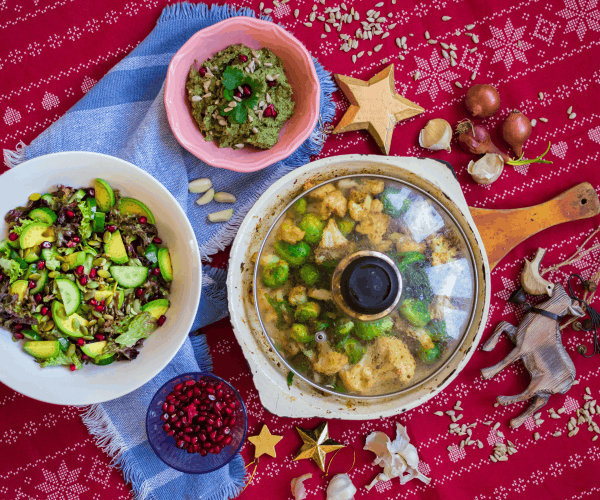

Healthier Christmas party food can be as simple as giving vegetables, pulses and fruit a proper place on the table alongside the festive favourites. There is no need to turn a celebration into a nutrition calculation or replace every familiar treat.
The NHS Eatwell Guide recommends a varied balance of foods across the day or week, rather than expecting every individual meal to match the guide exactly. That is a useful approach to a Christmas buffet: offer choice, make the vegetable dishes appealing and let guests build a plate they enjoy.
These three original recipes add different textures and flavours to the spread. They are not presented as low-calorie or nutritionally analysed products. Check ingredient labels and guests’ dietary requirements before deciding which versions to make.
Plan the buffet as a meal
Think about when people are arriving and whether the party replaces lunch or dinner. A few small snacks suit one occasion; guests arriving hungry after work need something more substantial.
Choose a manageable number of dishes. A warm centrepiece, a vegetable dish, a pulse-based dip and a small sweet option can be easier to serve well than a long list of fiddly canapés. Put bread and vegetable sticks beside dips so guests have a choice of accompaniments.
Give the vegetable dishes the same attention as the pastry or cheese. Fresh herbs, citrus zest, a contrasting texture and an attractive serving bowl can make a simple recipe feel like part of the celebration.
Roasted pepper and white bean dip
This makes a sharing bowl for approximately six people as part of a larger buffet. Allow about ten minutes to prepare.
Ingredients
Use 1 x 400g tin of cannellini beans, drained and rinsed; 150g roasted red peppers from a jar, drained; 1 tablespoon olive oil; 1 tablespoon lemon juice; ½ teaspoon smoked paprika; 2 tablespoons cold water; and black pepper. Serve with carrot and cucumber sticks and sliced wholemeal pitta, checking the bread’s allergens.
Method
Put the beans, peppers, oil, lemon juice, paprika and water into a food processor. Blend until smooth, scraping down the sides as needed. Add a little more water if the mixture is too thick for dipping.
Taste and adjust the lemon juice and pepper. Spoon into a bowl and cover until needed. Refrigerate promptly and follow the shortest relevant opened-ingredient storage instruction. Prepare close to serving rather than assuming a homemade dip will keep as long as a sealed shop-bought product.
Bring out a small bowl at a time and replenish from the fridge using a clean bowl. This keeps the presentation tidy and avoids leaving the whole batch on the table for the duration of the party.
Mushroom, chickpea and thyme filo cups
This recipe makes 12 small cups. Allow approximately 20 minutes to prepare and 15 to 20 minutes to bake. Check the filo pack for any different cooking requirements.
Ingredients
You will need 200g mushrooms, finely chopped; 1 small onion, finely chopped; 150g drained, ready-cooked chickpeas; 1 tablespoon tomato purée; ½ teaspoon dried thyme; 2 tablespoons olive oil, divided; approximately 6 large filo sheets; 1 to 2 tablespoons water; and black pepper.
Method
Heat one tablespoon of oil in a frying pan. Cook the onion over a medium heat for about five minutes until softened, then add the mushrooms. Cook for another six to eight minutes, stirring, until the mixture is no longer watery.
Roughly mash the chickpeas with a fork. Stir them into the pan with the tomato purée, thyme, water and pepper. Cook for two minutes. The filling should hold together without being wet; add only enough water to stop it catching.
Lightly oil a 12-hole muffin tin using some of the remaining oil. Cut the filo into squares large enough to line the holes. Arrange three thin layers in each hole, brushing sparingly with oil between them and turning the squares so their corners overlap. Filo sheets vary in size, so cut to suit your tin and keep unused pastry covered while you work.
Divide the filling between the cups. Bake in a preheated oven at 190°C, or 170°C fan, for approximately 15 to 20 minutes, until the pastry is golden and crisp and the filling is steaming hot throughout. Let the cups stand briefly before lifting them out carefully. Serve freshly baked.
Clementine and cinnamon yoghurt pots
For six small pots, use 500g plain yoghurt, 4 clementines and ¼ teaspoon ground cinnamon. Choose a yoghurt suitable for your guests and keep its storage instructions in mind.
Peel the clementines, remove any pips and cut the segments into bite-sized pieces. Divide half the fruit between six small glasses or bowls. Stir the cinnamon through the yoghurt, spoon it over the fruit and finish with the remaining clementine pieces.
Cover and refrigerate until serving. Assemble on the day for the best presentation. If using a dairy-free alternative, check its ingredient and allergen information rather than assuming the substitution suits every guest.
Make food safety part of hosting
Ask guests about allergies before preparing the food. Keep ingredient packaging available, use separate utensils where needed and avoid describing a dish as allergen-free unless that claim is supported by the ingredients and preparation arrangements.
The Food Standards Agency advises keeping chilled food out of the fridge for the shortest possible time, with four hours as the maximum. Aim for shorter serving periods, especially in a warm room, and do not treat that limit as extra storage time for cooked leftovers that should be chilled promptly.
Replenish the buffet in smaller batches and keep track of when food came out. If you cannot establish that a dish has been handled safely, do not save it for another meal.
Keep the celebration generous
A varied buffet does not require commentary about which foods guests should or should not eat. Put out the dishes, explain the ingredients when asked and make water and other drinks easy to find.
The aim is a table with enough contrast to be interesting: something crisp, something creamy, vegetables that taste good and a sweet finish. Those choices can sit comfortably beside the Christmas favourites everyone came to enjoy.
REFERENCES
Sources checked 26 October 2026. Recipes are original editorial development and have not been kitchen-tested or nutritionally analysed. Timings are guides.
1. NHS, the Eatwell Guide and balance across the day or week: https://www.nhs.uk/live-well/eat-well/food-guidelines-and-food-labels/the-eatwell-guide/
2. Food Standards Agency, safe chilling and limits on time out of refrigeration: https://www.gov.uk/government/publications/how-to-chill-freeze-and-defrost-food-safely/how-to-chill-freeze-and-defrost-food-safely
3. Food Standards Agency, festive food safety, including allergies and buffets: https://www.food.gov.uk/news-alerts/news/are-you-guilty-of-the-12-festive-food-fails