UK food manufacturers are operating in a supply chain environment that has become significantly more unpredictable over the last three years. Geopolitical tensions, maritime route disruptions, energy price volatility and a shifting trade landscape have combined to make sourcing, logistics and cost management harder than they were. The Food and Drink Federation revised its UK food inflation forecast to over 9 per cent by the end of 2026, driven by energy and supply chain shocks. For manufacturers without a clear resilience strategy, the next disruption is unlikely to be the last.
This is a practical look at what is actually driving supply chain risk right now, and which approaches are making a measurable difference for UK food businesses.
What is driving supply chain disruption in 2026
The risks in 2026 are layered rather than singular, which is part of what makes them difficult to manage.
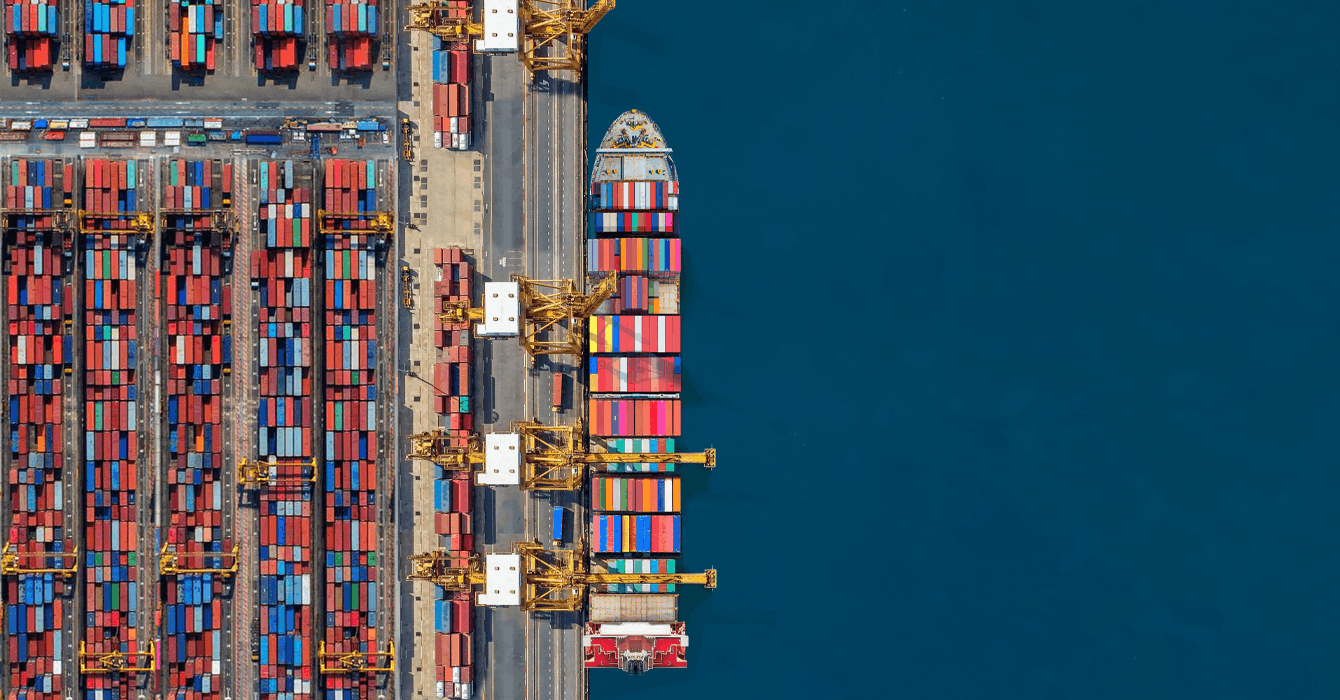
Maritime route instability remains a significant factor. Around 85 per cent of the UK's international freight by weight moves by sea. Disruption in 2024 forced container ships to reroute around the Cape of Good Hope rather than through the Red Sea, adding several weeks to transit times. Although a ceasefire was announced in April 2026, the US naval counter-blockade of the Strait of Hormuz continues, and ongoing uncertainty around Middle East trade routes is keeping freight costs and lead times elevated compared with pre-2024 levels.
Energy and commodity price volatility has not resolved since the initial shocks of 2022 and 2023. The Food and Drink Federation noted that manufacturing costs rose by an average of 4.5 per cent in Q1 2025, driven by logistics, packaging and labour costs, and that pressure has not fully eased despite some stabilisation in headline inflation.
Brexit-related trade friction with the EU continues to affect food exporters in particular. Exports to the EU remain around 34 per cent below pre-Brexit levels, according to industry analysis. While non-EU exports rose 10.6 per cent in early 2025, the EU remains the UK's largest single trading bloc, and the additional compliance and documentation burden for EU-bound shipments is a real ongoing cost for food manufacturers with European customers.
Tariff uncertainty is a newer pressure. The UK-India trade deal expected to take effect in 2026 may open new routes for packaged foods and ingredients, but it also introduces competition from lower cost imports. US tariff policy, including the broader global trade tensions between the US, China and the EU, has raised questions about the stability of commodity prices and freight routes that are not directly UK-to-US.
The shift from just-in-time to just-in-case
The most significant structural change in supply chain thinking over the past three years has been the shift from lean, just-in-time inventory models towards what is increasingly called a just-in-case approach. Oxford University and London Business School economists noted at a National Institute of Economic and Social Research seminar in April 2026 that businesses have broadly made this shift in response to geopolitical tensions, tariff increases and rising labour costs in global sourcing markets.
For food manufacturers, this shift has a specific implication: holding more buffer stock costs money in warehouse space and working capital, but the cost of a line stoppage due to a delayed ingredient shipment is often higher. The calculation has changed, and many businesses that optimised hard for lean inventory in the 2010s are now reviewing their minimum stock positions upward.
Nearshoring, sourcing ingredients and materials from closer to home rather than from the lowest cost global source, has become a visible trend for the same reason. Shorter supply chains mean shorter lead times and fewer points at which disruption can occur, though they typically come at a higher unit cost. The trade off between cost optimisation and supply security is now a live strategic question for most food businesses with complex ingredient sourcing.
What practical resilience looks like
Supply chain resilience is not a single intervention. The businesses that are managing disruption best tend to have several things in place simultaneously.
Supplier diversification, having more than one qualified supplier for key ingredients or materials, reduces the impact of any single supplier failure or regional disruption. It requires more procurement management resource to maintain but provides meaningful protection against the kind of single source concentration that left businesses exposed in 2020 to 2022.
Digital supply chain tools, including demand forecasting platforms, real-time inventory tracking and route optimisation software, give manufacturers better visibility of where their supply chain is under pressure before a problem becomes a crisis. IGD's Supply Chain Trends 2026 report identified technology investment as one of the clearest differentiators between businesses that absorbed disruption and those that were significantly affected by it.
Logistics partner relationships matter more than they did three years ago. The logistics market in the UK is itself under pressure, with a number of operators exiting the market in 2025 and 2026. Choosing logistics partners carefully and maintaining strong working relationships with providers is now a risk management consideration as much as a cost one.
Contingency planning, documenting what the business will do if a key route, supplier or logistics partner becomes unavailable, is increasingly a requirement from major retail customers rather than simply good practice. Businesses that cannot demonstrate documented contingency arrangements are at a disadvantage in supplier onboarding and annual review processes.
Trade developments worth watching
The UK-India trade deal, if it takes effect in 2026 as expected, is worth monitoring for two reasons. It may open genuine export opportunities for packaged food and drink businesses in categories where UK products carry premium positioning in India. But it also introduces import competition in categories such as spices, ambient ingredients and some processed foods, which matters for manufacturers who compete against imported alternatives.
The phasing of current tariff suspensions is a separate issue. Some temporary tariff reductions on imported food ingredients, introduced during the post-Brexit transition, are due to expire in 2027. For businesses that have built cost models around those suspensions, the timing of any return to standard tariff rates is worth tracking now rather than treating as a future problem.
A short checklist
Map your top ten ingredient and material suppliers and identify any single source concentrations where an alternative supplier is not qualified.
Review your minimum stock position for high risk inputs against the current lead time reality rather than the pre-2022 baseline.
Check whether your current logistics arrangements give you adequate contingency if your primary provider has capacity issues or exits the market.
Document your supply chain contingency plan, even at a basic level, if you do not already have one. Major retail customers increasingly expect this.
Monitor the timing of UK-India trade deal implementation and tariff expiry dates that could affect your input costs from 2027 onward.
Frequently asked questions
What is the biggest supply chain risk for UK food manufacturers in 2026? Maritime route instability and energy price volatility are the most immediate pressures, alongside Brexit-related trade friction for businesses exporting to the EU. The combination of multiple overlapping risks, rather than any single cause, is what makes the current environment particularly difficult to manage.
What does just-in-case supply chain management mean in practice? It means holding more buffer stock of key ingredients and materials than a lean just-in-time model would suggest, accepting a higher inventory cost in exchange for protection against the disruption risk that has become more frequent and harder to predict since 2020.
Is nearshoring right for all food manufacturers? Not necessarily. Nearshoring reduces lead times and single point of failure risk but typically increases unit costs. The right answer depends on which ingredients or materials are involved, how time sensitive they are, and how much of a premium the business can absorb in exchange for supply security.
How does Brexit continue to affect UK food supply chains in 2026? Exports to the EU remain around 34 per cent below pre-Brexit levels due to additional compliance, documentation and border check requirements. For manufacturers selling into European markets, this is an ongoing operational and cost burden rather than a transitional one.
REFERENCES
House of Commons Library, economic update: how resilient are current supply chains, updated June 2026.
Logistics and Handling, supply chain disruption: how prepared is the UK for the next trade shock, April 2026.
IGD, supply chain trends 2026 report, November 2025.
Food and Drink Federation, UK food inflation forecast and manufacturing cost data.
Orderly, serving up 2026: trends shaping UK foodservice, retail and supply chain.
NorthStar Consulting, UK food and drink SMEs: supply chain challenges 2025.
GOV.UK, global supply chains: a foresight report on risk and resilience.
Disclaimer: This article is for general information only and does not constitute legal, financial or trade advice. Food and Drink Network UK is not a trade or logistics adviser. Data and forecasts referenced above are sourced from third parties and may change. Businesses should consult qualified advisers before making strategic supply chain decisions based on this content.